High-Converting Landing Pages: Where the Decision Actually Gets Made
Your ads and emails get people to the door. But high-converting landing pages are what determine whether they walk through it.
The landing page is where the decision gets made. Everything before it, the ad, the email, the social post, is just getting someone to the door. What happens on the page is what determines whether they walk through it. That’s why high-converting landing pages aren’t a nice-to-have. They’re the part of your funnel that actually decides whether you make money.

Why Most Kajabi Landing Pages Fail
The most common mistake is leading with features instead of outcomes. A headline like “12-week online course” tells your visitor what it is. It doesn’t tell them what changes for them after they complete it. That’s the only thing they care about.
The second mistake is burying the CTA. Most pages make you read through four sections before you find a button. By that point, the visitor has either decided or left. The CTA needs to appear early, repeat throughout, and be impossible to miss.
The Seven Sections Every Landing Page Needs
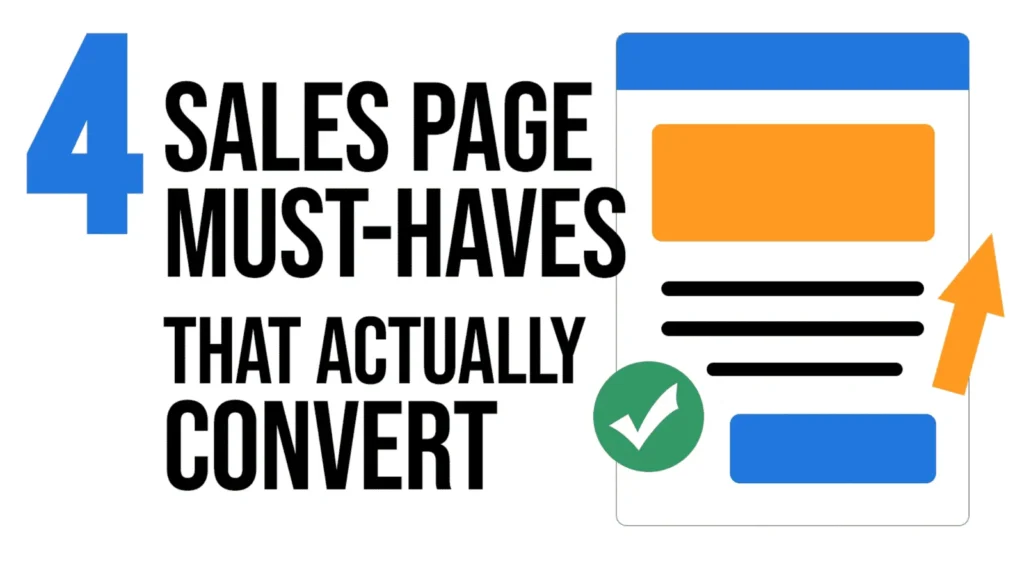
After building and testing hundreds of Kajabi landing pages, we’ve settled on a structure for high-converting landing pages that works consistently across niches, price points, and audience types.
1. The Headline
One job: stop the scroll. It should state the transformation your offer delivers, not describe the offer itself. “Stop losing sales to a site that undersells you” works harder than “Kajabi web design services.”
2. The Sub-Headline
Expand on the headline with one specific, credible sentence. Introduce the mechanism: what you do, and for whom. This is where you earn the right to the next paragraph.
3. The Primary CTA
Put it here, above the fold. You’ll repeat it lower down. The visitor who already knows they want this shouldn’t have to scroll to find the button.
4. Social Proof
A number, a name, a result. Not a logo wall, a human saying something specific. “47 coaches enrolled this month” works. A row of brand logos nobody recognizes doesn’t.
5. The Problem Section
Name the pain. Not dramatically, plainly. “You’re getting traffic but not conversions” is more powerful than “Are you struggling to grow your online business?” One is specific. The other is generic enough to mean nothing.
6. The Solution
This is where you show the offer. Structure, benefits, what’s included. Keep it outcome-focused. Every bullet point should answer: “So what does this mean for me?”
7. The Close
Restate the transformation, handle the last objection, and give them the CTA again. Short. Confident. Done.
You can have all seven sections in the right order and still convert at 2 percent if the language doesn’t speak to what your visitor actually feels.
One Thing Most Guides Don’t Tell You
The page structure matters less than the copy. High-converting landing pages always sound like they were written by someone who’s been in the reader’s situation. The best ones read like the writer has been inside the reader’s head. That only comes from knowing your audience well enough to use their exact words back at them.
If you don’t have that voice yet, start with your existing students. Ask them what they were struggling with before they found you. Use those words, verbatim, on your landing page. It will outperform anything you write from scratch.
Where to Start
Pull up your worst-performing page and run it through the seven sections. Check whether each one is doing its single job, or whether it’s been asked to do two. Most pages can be fixed in an afternoon once you know what’s missing.
If you want help auditing your funnel and rebuilding high-converting landing pages that actually move the needle, reach out and we’ll walk through it together.